

The TVNL has undergone a comprehensive Landscape Character Assessment (LCA), developed in collaboration with neighbouring local authorities and guided by a nationally approved methodology (Countryside Agency, 1992). This assessment, supported by extensive local consultation, provides a robust evidence base for understanding, monitoring, and managing the valley’s unique and evolving landscape.
The process began with a desk-based study identifying fine-grained Landscape Description Units (LDUs) based on distinct topography. These were then assessed in the field and grouped into broader Landscape Character Areas (LCAs)-geographically specific areas with a strong individual identity. Each LCA is described using consistent criteria and summarised by a set of key characteristics.
Alongside this, Historic Landscape Characterisation (HLC) has been completed, offering insight into the centuries of human interaction that have shaped the valley. While HLC types may align with LDUs in some areas, they often intersect or blend, adding depth to our understanding of the landscape’s cultural and historical layers. The Tamar Valley Landscape Character Assessment has identified 12 different landscape character types for the Tamar Valley; these are areas of landscape that are relatively uniform in character, sharing similar characteristics of geology, landform, drainage patterns, vegetation and historical land use and settlement pattern.
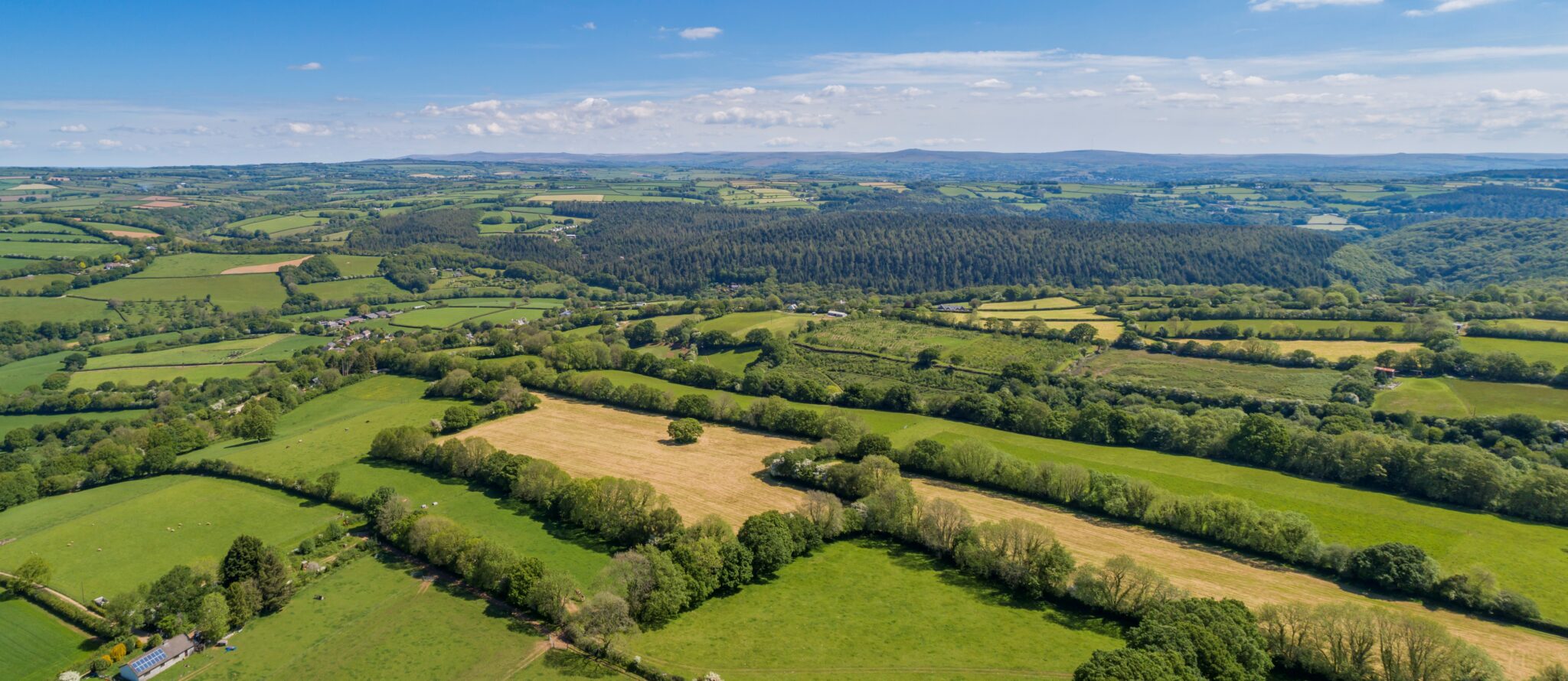
© Tobi O’Neill, TON Drone Services
Together, the LCA and HLC provide a foundation for strategic planning, conservation, and land management, helping to conserve and enhance the Tamar Valley’s special qualities. These assessments are now widely used to guide change and ensure development aligns with the area’s character and values.
Landscape has been described as a meeting ground between people and nature, past and present, and tangible and intangible values. By analysing the features that contribute to our sense of place, we can monitor landscape change and identify processes that either strengthen or erode what we value most. This awareness enables us to shape policies and actions that reduce negative impacts and reinforce the Tamar Valley’s identity.
The original 1992 assessment by the Countryside Commission helped secure the Tamar Valley’s designation as an Area of Outstanding Natural Beauty (AONB). Since then, recent reviews have built on this foundation, reinforcing the valley’s distinctiveness and informing delivery priorities over five- and thirty-year horizons.
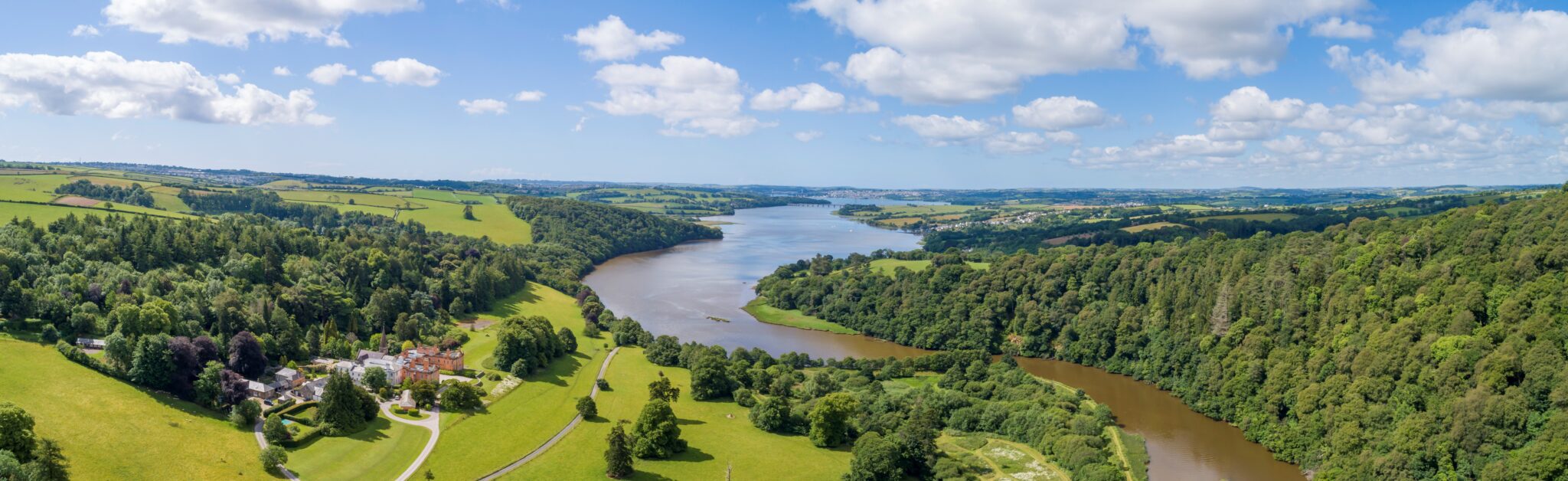
© Tobi O’Neill, TON Drone Services
The TVNL Partnership has also established a landscape monitoring programme, the State of AONB report, providing indicators of change in relation to the valley’s special qualities and external pressures. Issues such as light pollution, road noise, and visual encroachment are increasingly recognised as threats to tranquillity and visual beauty-key components of natural beauty.
Iconic viewpoints like Kit Hill’s summit and the riverside at Calstock offer panoramic and intimate experiences of the landscape. At a more local scale, socially and culturally significant places-such as historic orchards, smallholdings, and allotments-are valued by communities even when their heritage is not fully understood. These elements must be reflected in planning decisions and protected through appropriate mitigation strategies to meet the objectives of the Management Plan.
To view the Landscape Characterisation for the area of the TVNL within Cornwall, go to this link: Cornwall and the Isles of Scilly’s Historic Environment
To view the Landscape Characterisation for the area of the TVNL within Devon, go to this link: Devon County Council Environment Viewer