
The Defra Protected Landscapes Targets and Outcomes Framework for Nature for the UK are:
Target 1
Restore or create more than 250,000 hectares of a range of wildlife-rich habitats within Protected Landscapes, outside protected sites by 2042 (from a 2022 baseline).
Target 2
Bring 80% of Sites of Scientific Interest (SSSIs) within Protected Landscapes into favourable condition by 2042.
Target 3
60% of SSSIs within Protected Landscapes assessed as having ‘actions on track’ to achieve favourable condition by 31 January 2028.
Target 4
Continuing favourable management of all existing priority habitat already in favourable condition outside of SSSIs (from a 2022 baseline) and increasing to include all newly restored or created habitat through agri-environment schemes by 2042.
The international obligation that the government has signed up to of 30% of land and sea managed for nature by 2030 is a current major policy driver.
National Landscapes (15% of England) include 31% of England’s SSSIs, 22% of England’s broadleaved woodland and 18% of England’s deep peat.
Target 5
Ensuring at least 65% to 80% of land managers adopt nature friendly farming on at least 10% to 15% of their land by 2030.
Target 7
Restore approximately 130,000 hectares of peat in Protected Landscapes by 2050.
Target 8
Increase tree canopy and woodland cover (combined) by 3% of total land area in Protected Landscapes by 2050 (from 2022 baseline).
The TVNL supports 24 of the UK’s 56 priority habitats, including ancient woodland, lowland heath, saltmarsh, reedbeds, and species-rich grasslands. These habitats underpin vital ecosystem services such as carbon storage, flood mitigation, and pollination. Key designated sites include the Tamar-Tavy and Lynher Estuary SSSIs, Marine Conservation Zones, and County Wildlife Sites, which together form a mosaic of high ecological value.
In 2023 the Tamar Valley launched its Nature Recovery Plan: Nature Recovery Plan – Tamar Valley National Landscape Tamar Valley National Landscape. It sets out an ambitious framework to restore and enhance biodiversity across this nationally important landscape. In response to ecological and climate emergencies, the plan aligns with national targets including the UK Government’s “30 by 30” commitment and the Colchester Declaration, aiming to recover habitats, species, and nature connectedness.
The plan identifies 17 Tamar Valley Special Species for targeted conservation, including the Greater Horseshoe bat, Heath Fritillary butterfly, Allis shad, and Plymouth pear. These species represent broader ecological needs and offer opportunities for public engagement and citizen science. 15 of these Special Species are also Focus Species for Cornwall and the Isles of Scilly Nature Recovery Strategy.
Nature recovery actions span four domains: designated sites, the working landscape, built-up and post-industrial areas, and species-specific interventions. Priorities include improving habitat condition, enhancing connectivity, supporting sustainable land management, and engaging communities in nature stewardship.
The plan is underpinned by collaborative delivery with farmers, landowners, local authorities, and conservation organisations. It promotes nature-based solutions to climate change and seeks to unlock funding through mechanisms like Biodiversity Net Gain and the Environmental Land Management scheme.
Monitoring and evaluation will track progress against habitat, species, and engagement targets, ensuring alignment with Local Nature Recovery Strategies and national policy. By 2030, the Tamar Valley aims to be a thriving, resilient landscape where nature and people flourish together.
The Tamar Valley Nature Recovery Plan provides the local delivery mechanism for achieving these national Protected Landscape targets. By restoring priority habitats, improving SSSI condition, and promoting sustainable land management, the plan directly contributes to Targets 1-4 and supports the wider ambition for 30% of land managed for nature by 2030.
Local Nature Recovery Strategies
Local Nature Recovery Strategies (LNRS) are a statutory requirement under the Environment Act 2021, designed to guide targeted action for nature recovery across England. Both Devon and Cornwall now have LNRSs in development or published, covering the TVNL.
The Cornwall and Isles of Scilly LNRS is already available and sets out mapped priorities for habitat creation, species recovery, and climate resilience. It identifies key areas for restoring biodiversity, improving water quality, and increasing woodland cover, with strong links to community engagement and landowner collaboration. A dedicated digital hub has been created where the strategy can be read, and it provides access to the mapping portal:
Cornwall and Isles of Scilly Nature Recovery Strategy | Let’s Talk Cornwall.
For information on the Special Species, follow the link to the Recovery Toolkit:
Focus Species Recovery Toolkit | Let’s Talk Cornwall
The Devon Local Nature Recovery Strategy (draft), developed jointly for Devon, Plymouth, and Torbay by Devon County Council and the Devon Local Nature Partnership, identifies high-value habitats and locally led actions to halt species decline, support sustainable land use, and deliver wider environmental benefits. The draft Devon LNRS completed its public consultation stage on 5 November 2025:
Devon Local Nature Recovery Strategy (LNRS) | Devon County Council.
For information on the Special Species within the Devon Local Nature Recovery Strategy (draft), follow the link:
Habitats and Species | Devon Local Nature Recovery Strategy (LNRS) | Devon County Council.
What Nature recovery in the Tamar Valley can look like
Species-rich communities are essential for functioning, resilient ecosystems and the recovery of high-quality priority habitats is key to securing the future of associated species.
Our Tamar Valley National Landscape Partnership has adopted a list of Special Species that will become the focus of our efforts to safeguard and enhance their natural habitat.
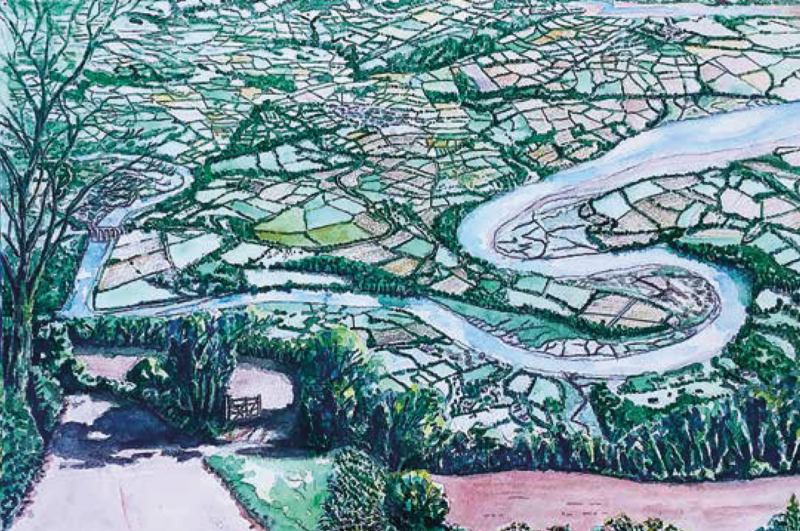
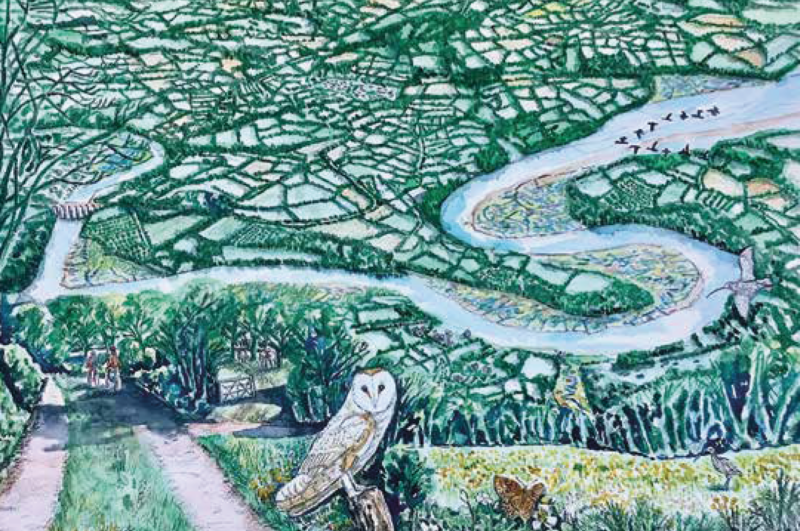
The list includes species:
- of most conservation importance or concern (Priority Species), particularly where the Tamar Valley is an important area for a population.
- associated with the diverse habitats which should be flourishing in the Tamar Valley and beyond, and which can benefit from our work to improve and connect Priority Habitats across the National Landscape.
- that people will recognise and might be able to see – and help – in their own back gardens and local areas.
Tamar Valley National Landscape will also take action for other species, including our important invertebrates and pollinators, working together with our partner organisations and the wider community, where opportunities arise, and resources allow.
The Tamar Valley National Landscape Special Species are:
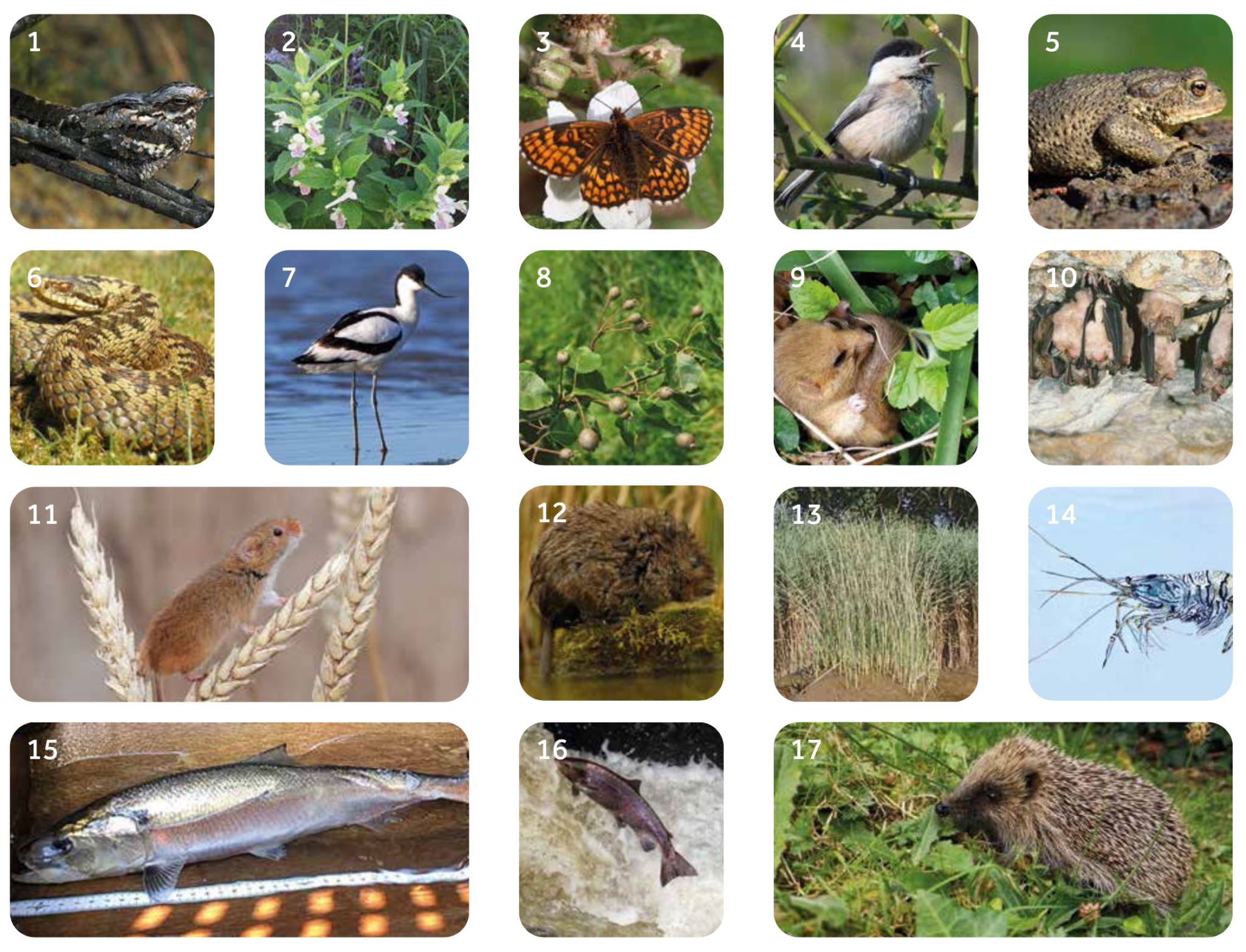
- Nightjar, UK Status Amber, Birds of Conservation Concern 5
- Bastard balm, Rare and declining
- Heath Fritillary butterfly, Sec 41 species of principal importance (NERC Act)
- Willow tit, UK Status Red, Birds of Conservation Concern 5
- Common toad, UK Biodiversity Action Plan Priority Species
- Adder, Near Threatened or Vulnerable, IUCN Red List
- Avocet, UK Status Amber, Birds of Conservation Concern 5
- Plymouth pear, Critically Endangered, IUCN Red List of Threatened Plants
- Dormouse, Vulnerable, GB Red List
- Greater horseshoe bat, Near Threatened, IUCN Red List
- Harvest mouse, UK Biodiversity Action Plan Priority Species
- Water vole, Endangered, Species of Principal Importance, NERC Act
- Triangular club-rush, Critically Endangered, Botanical Society of Britain & Ireland
- Delta prawn, Common
- Salmonids (Salmon and Trout), Endangered, IUCN Red List
- Allis shad, UK Biodiversity Action Plan Priority Species
- Hedgehog, Vulnerable to Extinction, IUCN Red List for British Mammals
Nature Recovery Case Studies
Stoke Climsland Farm Cluster
Bringing farmers together to create landscape-scale environmental change. Read more >
Link: Stoke Climsland Farm Cluster
South Hooe – Connecting Habitats and Building Natural Capital
Improving ecological connectivity through habitat creation and restoration, natural capital and ecosystem services. Read more >
Tackling Invasive Non-Native Species in the Tamar Catchment
The Tamar Invasives Group coordinating efforts to tackle the spread of invasive non-native species. Read more >